Cursive practice sheets for beginners: Start with letter joins
Use printable cursive practice sheets to work on joins, word spacing, and baselines. Includes sample words and tips for moving from tracing to copying.
Pick one cursive model
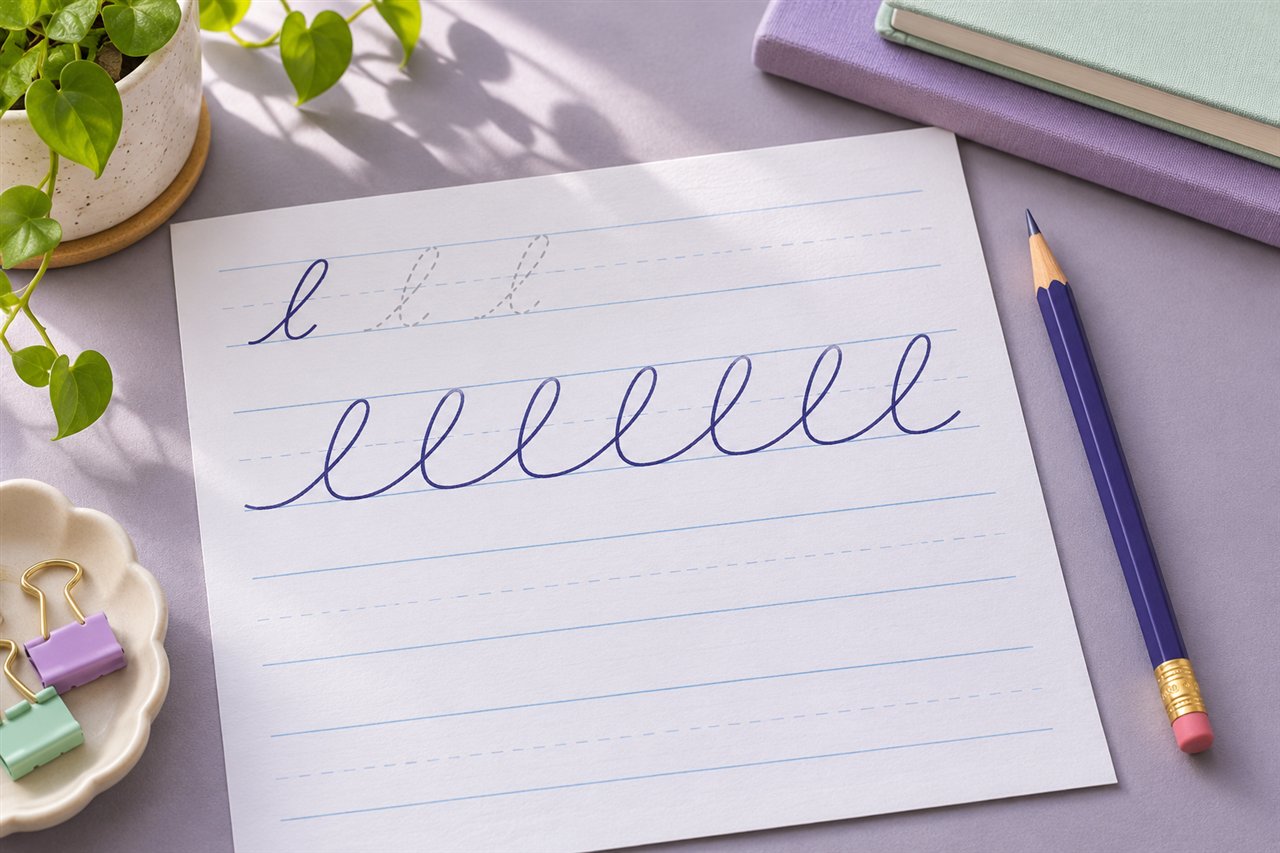
WorksheetSprout includes US Traditional and US Modern cursive models. If the learner has a classroom model, compare both previews with the style their teacher uses and choose the closest match. Keep the same model through a practice set so the learner sees consistent forms and joins.
Begin with a short join
Print a small group such as in, it, and ill. Demonstrate the join using the printed model and talk through the direction of the stroke. Watch how each letter finishes and how the next one begins. Practice a few steady repetitions and leave enough room on the page for the learner to copy it on a blank line.
Move from a join to a word
Try in, then pin, then spin. Read the word together before writing it. Circle one join that follows the model closely and try that movement again. If the join looks pressed together, slow down and make the example larger instead of adding extra rows.
Use a short sentence once a few words are comfortable
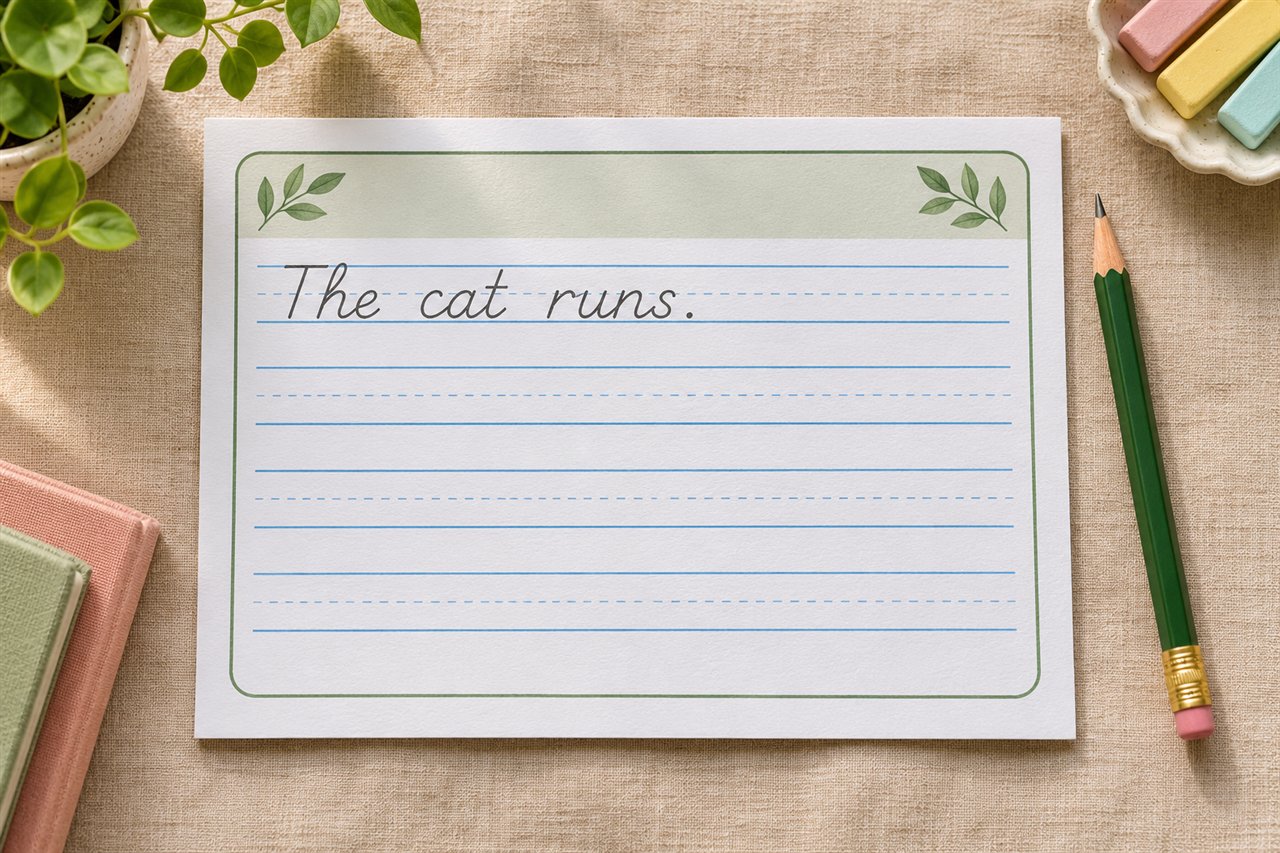
Choose a sentence such as I can spin. Start with one model row and one blank copy row. Ask the learner to notice which letters connect and where the word breaks. Some letter combinations, especially capitals, may be taught differently in your classroom. Follow the class model when it differs.
Set up your sheet
Choose Dotted tracing for a guided attempt or Copy the example when the learner can follow a visible model independently. Increase the letter size when the loops feel cramped. Add a blank row for independent practice and use the preview to check the join spacing before printing.
A sample three-step practice sheet
For a session on the a–t join, enter at, cat, and scat on separate lines. Use Copy the example and add a blank row after each line. Start by showing the learner where the pencil leaves the a and how it travels into the next letter. Ask them to practice the join twice before copying cat. Add scat after they can locate the same join in the longer word.
If the chosen font shows a form differently from a classroom workbook, use the teacher’s stroke directions when demonstrating it. The printable can give the learner a visible letter shape and room to practice, but the preview does not demonstrate stroke order.
Give feedback on one detail at a time
- The letters drift off the baseline. Point to the guide and write a slow example beside the one in the packet. Ask the learner to notice where each letter returns to the line.
- The joins run together. Use fewer letters per row and increase the letter size. Let the learner copy a single pair before attempting a whole word.
- Words are hard to tell apart. Have the learner point to the gap between words in the model before writing. Practice one short sentence with clear spacing.
- The learner presses hard or tires quickly. Shorten the practice session and use the page again later if it still fits the goal.
Switch from tracing to copying deliberately
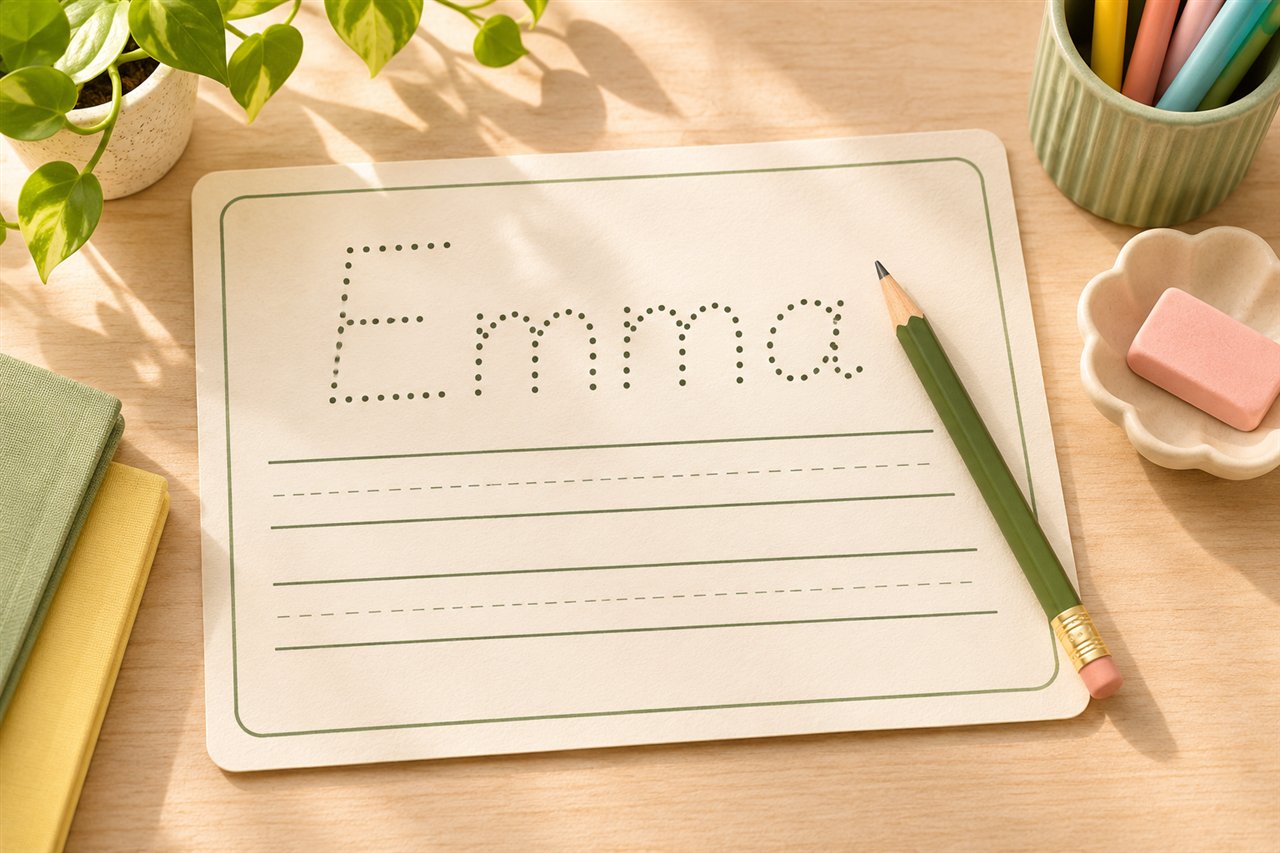
A dotted model is useful when the learner is trying to locate the letter shape. A copy row gives them a chance to judge the space on their own. Print one of each for a new word, then keep the copy rows when the learner can start the movements from the printed example. See the copywork guide for a short model-copy-compare routine.
Try it with your own worksheet
Customize the page, check the preview, and download a free PDF.